

Modern Approaches to Treating Anal Cancer at Erebuni Radiotherapy Center
Anal cancer is a rare but serious malignancy of the gastrointestinal tract, accounting for only 2–5% of all tumors in this system. When diagnosed and treated in time, the chances of recovery are significantly high.
Main Causes and Symptoms
As noted by radiation oncologist Dr. Stanislav Smolnikov:
“The main causes of anal cancer include human papillomavirus (HPV), human immunodeficiency virus (HIV), and frequent trauma to the anal area. The disease may initially manifest as the presence of blood in the stool, followed by pain and changes in the groin region. Such symptoms should not be ignored — early medical consultation is crucial for timely diagnosis and treatment.”
Treatment Strategy and Advanced Technologies
The cornerstone of anal cancer treatment is chemoradiotherapy. Numerous international studies confirm its effectiveness, with five-year survival rates reaching 70–90%.
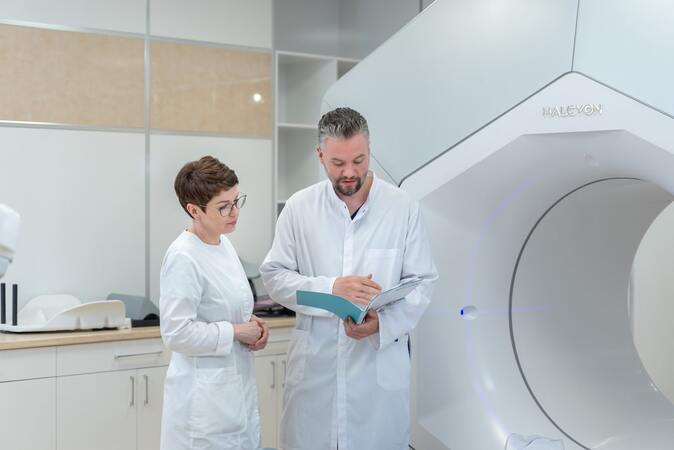
At Erebuni Radiotherapy Center, advanced radiotherapy technologies are used to target tumors with maximum precision while preserving surrounding healthy tissues.
Dr. Smolnikov explains:
“We use VMAT IMRT technology — intensity-modulated radiotherapy. This approach significantly reduces radiation exposure to nearby organs and structures.”
Accurate Diagnosis and Individualized Care
Before starting treatment, patients undergo comprehensive diagnostic evaluations, including PET, MRI, and contrast-enhanced CT scans. Accurate identification of affected areas is essential for targeted and effective radiation delivery.
In addition, before each session, patients receive clear instructions regarding their diet, hydration, and the condition of the bladder and intestines. Following these guidelines helps reduce the risk of radiation-related side effects and increases the overall effectiveness of therapy.
Treatment Process and Outlook
“Toward the end of the course, some discomfort may occur — for instance, redness in the treated skin area. However, these side effects are temporary and usually resolve within 3 to 4 weeks after completing the therapy,” says Dr. Smolnikov.
Importantly, radiation therapy does not impair bowel or sphincter function, and in some cases, it may even improve them.
Conclusion
Today, anal cancer is a disease that can be effectively treated. With modern radiotherapy technologies, precise diagnostics, and an individualized approach, Erebuni Radiotherapy Center achieves excellent outcomes for its patients.
The key is not to delay seeing a doctor at the first signs of concern. Our medical team is committed to helping each patient return to a full and healthy life.
 Stanislav V. Smolnikov
Modified: 2026-09-04
Stanislav V. Smolnikov
Modified: 2026-09-04